
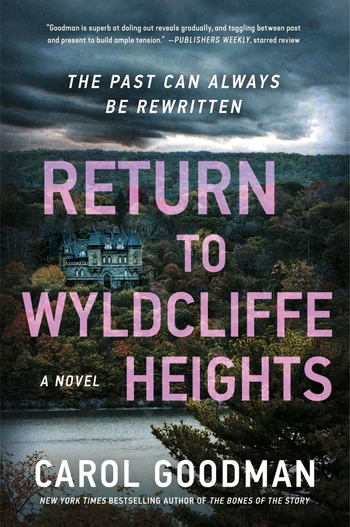
Review: Goth Girl, Interrupted

★★★★

Agnes Corey isn’t your typical New York editorial assistant.  She hasn’t earned a degree in publishing, didn’t go to a ritzy college, and her past is “a story of abandonment, foster homes, petty crimes, and state institutions.”

She works at a near-bankrupt Manhattan legacy publisher that hasn’t had a best seller since the early 1990s and is likely to be swallowed up by a conglomerate. That might explain why even as a probationary hire, she’s grossly underpaid, earning much less than the current real-life average salary for her job.

Corey is troubled, vulnerable, poor, plagued by nightmares and memories of her mentally ill mother. Adding to the misery is being so broke she can only afford to live in a crummy hostel until luck and daring take charge of her life. She’s hired to help a famous, reclusive author of a very Gothic novel adored by millions, the novel that put her publishing house on the map. Fans have been ravenous for more content from author Veronica St. Clair, a sequel to be exact, because the first book had an ambiguous ending.

The mansion Corey comes to at night and in the rain (of course!) is like every castle or mansion from Anne Radcliffe through the Brontës to Shirley Jackson and beyond: eerie, overwhelming, oozing menace and mystery. Even better, it was once a mental institution and like Shirley Jackson’s Hill House, it seems a bit mad itself.

The author name checks plenty of celebrated Gothic works, and the novelist’s name even echoes the heroine of The Mysteries of Udolpho, Emily St. Aubert.  Goodman deftly deploys time-tested Gothic tropes: scary scenery, shadows, the damsel in distress, exploring dark corners, paranoia, claustrophobia, imagined phantoms, dreadful weather, real and misplaced fears–and of course the house that seems like a brooding, malevolent being.

The author can even make the West Village in Manhattan seem creepy and mysterious–at least at night.  She also writes good satire of the publishing business while giving it the ironic hipster appeal of vinyl and flip phones.

As the novel develops, Corey’s nightmares are so intense that they bleed into her everyday reality, in part because she’s a sleep walker. When she starts taking dictation from the reclusive author whose life might echo the storyline of the original best seller, is that fact or fiction?  Is she a remotely reliable narrator?  If she is, can we trust Veronica St. Clair?  The novel more and more feels like a Russian nesting doll as stories keep appearing within other stories.

Readers may either be fascinated or thrown by the way the book slowly drifts into a tale of drugs and Goths in New York whose soundtrack could easily be Lou Reed’s Street Hassle. And the focus on Corey’s dreams can sometimes feel excessive.  For a deeper immersion in the Gothic style, I highly recommend Sarah Perry’s brilliant, beautifully-written novel Melmoth which revisits the 1820 novel Melmoth the Wanderer by Charles Robert Maturin and turns it inside out.

Lev Raphael spent his senior year of college reading all the classic Gothic novelists, some of them in period editions.  The author of twenty-seven books in genres from memoir to mystery, he has reviewed books for The Detroit Free Press, The Washington Post and other outlets. His most recently published short story “Lost in London” is a Gothic ghost tale.
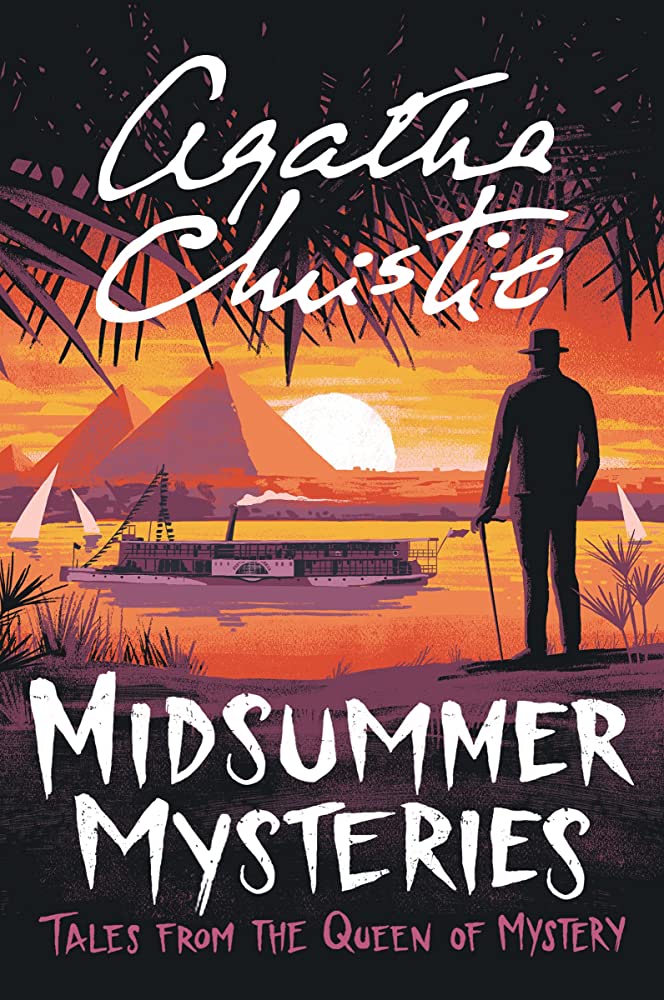
Summertime…and the Christie is Breezy

Agatha Christie has been in the news lately along with other authors as someone whose “potentially objectionable” comments about characters needed to be censored for contemporary audiences.  Several of her novels have been rewritten by her publisher, as reported in The Guardian:

[The] edits cut references to ethnicity, such as describing a character as black, Jewish or Gypsy, or a female character’s torso as “of black marble” and a judge’s “Indian temper”, and removed terms such as “Oriental” and the N-word. The word “natives” has also been replaced with the word “local.”

Sure enough, this new collection of short stories seems to mock gay men and has a “fat Jewish woman” and “Asian” is used as a pejorative.  Moments like that might give you pause–or you might just accept them as representative of her time and her class.  Will they spoil your enjoyment of these light summer reads?  I long ago accepted her antisemitism as par for the course in The Gilded Age and in her social milieu.  My appreciation of her work inspired me to write three books including one of my best-known mysteries, The Edith Wharton Murders.

Christie is the first mystery novelist I read way back in junior high school and though she might make me occasionally wince, I’ve always relished her clever plots and her keen attention to incongruity in dialogue and action.  She’s masterful in that regard and often very entertaining.  Her satire of Brits abroad is always delicious, as in “The Oracle at Delphi”:

Mrs. Peters had tried hard to take an interest in Ancient Greece, but she found it difficult.  Their statuary seemed so unfinished; so lacking in heads and arms and legs.  Secretly, she much preferred the handsome marble angel complete with wings which was erected on the late Mr Willard Peters’ tomb.

We of course find Miss Marple here, in the very well-plotted–if not quite believable–tale The Blood-Stained pavement, remarking as usual that “There is a great deal of wickedness in village life.”  Poirot’s little grey cells are keenly at work in a story whose title is perhaps too much of a giveaway, but is diverting anyway: “The Double Clue.”  Poirot also solves a case without leaving his home in “The Disappearance of Mr. Davenheim,” demonstrating the superiority of thought over feeling once again.  But Miss Marple can do something similar elsewhere in the collection, based as always on her keen observation of human nature.

Throughout the collection, the characters are described briskly and the dialogue is well-tuned.  There’s sometimes the whiff of port and cigars shared by an after-dinner raconteur and you might feel you’re enjoyably back in the Edwardian era of a ghost story-telling.  

The best story is the fast-paced and highly amusing “Jane in Search of a Job” about a young women hired under unusual circumstances.  It’s got some lovely twists and tart observations like this:

In moderation Jane did not object to crime. The papers had been full lately of various girl bandits. Jane had seriously thought of becoming one herself if all else failed.

As with other new Christie titles published by Morrow, the book is beautifully produced with a pleasingly readable type font and an attractive cover. Though  Morrow’s volume of ghost stories released last Fall for Halloween is somewhat more entertaining, it’s still a fun, quick read for fans of the Queen of Mystery.

Lev Raphael was the longtime crime fiction reviewer for the Detroit Free Press and is the author of ten Nick Hoffman mysteries set in contemporary academia.