The Grand Affair: A Thrilling Biography of John Singer Sargent

Growing up in Rome in the mid-19th century, John Singer Sargent could not have asked for a better informal education for the world-class artist he would become. He was surrounded by museums overflowing with great art and just as important, his ebullient, energetic American mother hosted gatherings of painters, sculptors, poets and writers. 

Sargent’s mother was obsessed with European culture and may have modeled that enthusiasm for her son.  She also was an inveterate traveler “for her health,” so the family traipsed all over Western and Central Europe with young Sargent watching, studying, sketching–whether in museums or on mountain tops.  It’s fascinating to read about the challenging mountaineering he did in Switzerland with his father, something you might not associate with a man who later spent so much time in salons and studios.

This was a period when living in Europe cost much less than in the U.S. and  Americans like his mother were ravenous for culture of the Old World. Sargent grew up multilingual, voraciously interested in art, and Rome is where he was first exposed to an artistic subject that would be a constant in his life, though somewhat secret: male nudes. 

Whether painter or connoisseur, back then you could appreciate these nudes as the “ideal representation of humanity” without arousing suspicion, but Sargent’s sketches and paintings showed more than just artistic fascination.  Fisher explores this terrain with wit and style, referencing many of Sargent’s sketches and paintings that were unknown during the painter’s lifetime to make this crucial point.   As he puts it, they “stood out as charged, emotional composition.”

Sargent never married and had many deep friendships with male artists and models as long as he lived, while cultivating rich, powerful “iconoclasts and divas” like the famed art collector and Isabella Gardner.  Was he queer?  It seems obvious that he was and that it was part of his unique vision of people which astonished other painters, including tutors and teachers–and eventually made him famous. 

Some of the best writing in the book explores the not-so-hidden gay salons and haunts in Paris, New York, and Venice and how artists, writers, and wealthy men flirted with this subculture or made themselves at home in it. Fisher also deftly explains all the ways in which Sargent often focused on wealth and celebrity in his work while interrogating it as well, with many subtle touches of eroticism.  Fisher couldn’t be a better guide in analyzing paintings: he’s illuminating without ever coming across as academic or dry.

He also deftly analyzes Sargent’s keen business sense: even in his early twenties, Sargent knew how to cultivate wealthy sitters so he could attract more of them and knew what was daring and unique enough to have work publicly displayed.   He did that while remaining in his public persona “understated, hard-working, and self-effacing.” The author does a splendid job charting Sargent’s peripatetic life and the ways in which he presented as comme il faut but was actually innovative and even disruptive in his art, testing the limits of what the public might accept.  That thread is important for contemporary readers who might need some of the painter’s work decoded due to its subtlety.
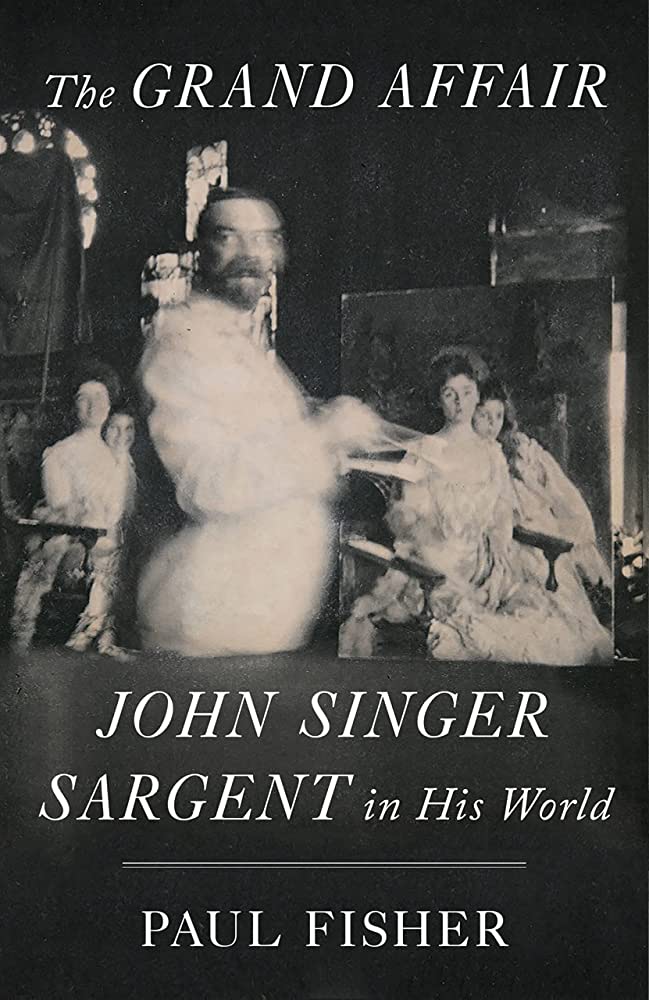
Given the book’s subject and the gorgeous color plates, it’s strange that the cover is so grim and unappealing.  Fisher’s luscious book deserved better production, something worthy of his subject’s style and genius, worthy of this “painter of luminous complications.”  It also deserved much better copy editing because there are too many missing words and repetitions throughout the book.

All the same, this masterful biography is perfect not just for fans of the painter but for anyone eager to read more about The Gilded Age.  One celebrity after another passes through these pages–including Henry James, Robert Louis Stevenson, Monet, Isabella Gardner–and Fisher ably interrogates the privilege that artists like Sargent benefited from, without sounding like too much of a scold.

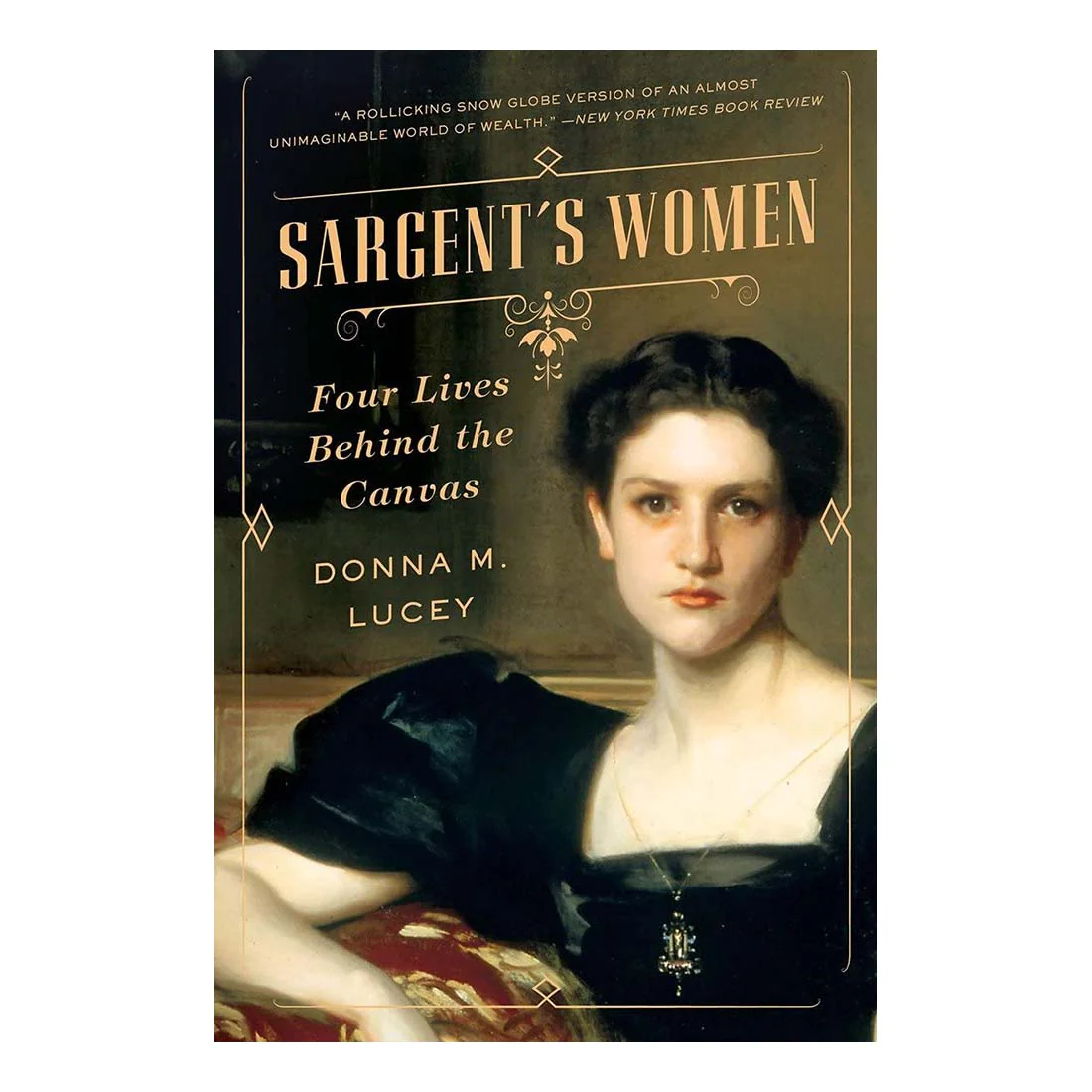
Be prepared to spend some time on Google looking up paintings and painters you might not have heard of before. And readers might also want to try Donna Lucey’s brisk and entertaining Sargent’s Women which explores the colorful biographies of the women behind four of his iconic portraits.
A lifelong fan of vivid biographies, Lev Raphael fell in love with Sargent’s portraits in college.  One of the most enthralling exhibitions he’s ever attended was the mammoth 1987 show of the painter’s work at the Art Institute of Chicago.  Raphael has reviewed books for Bibliobuffet, The Detroit Free Press, Jerusalem Report, The Washington Post, and The Ft. Worth Star-Telegram.
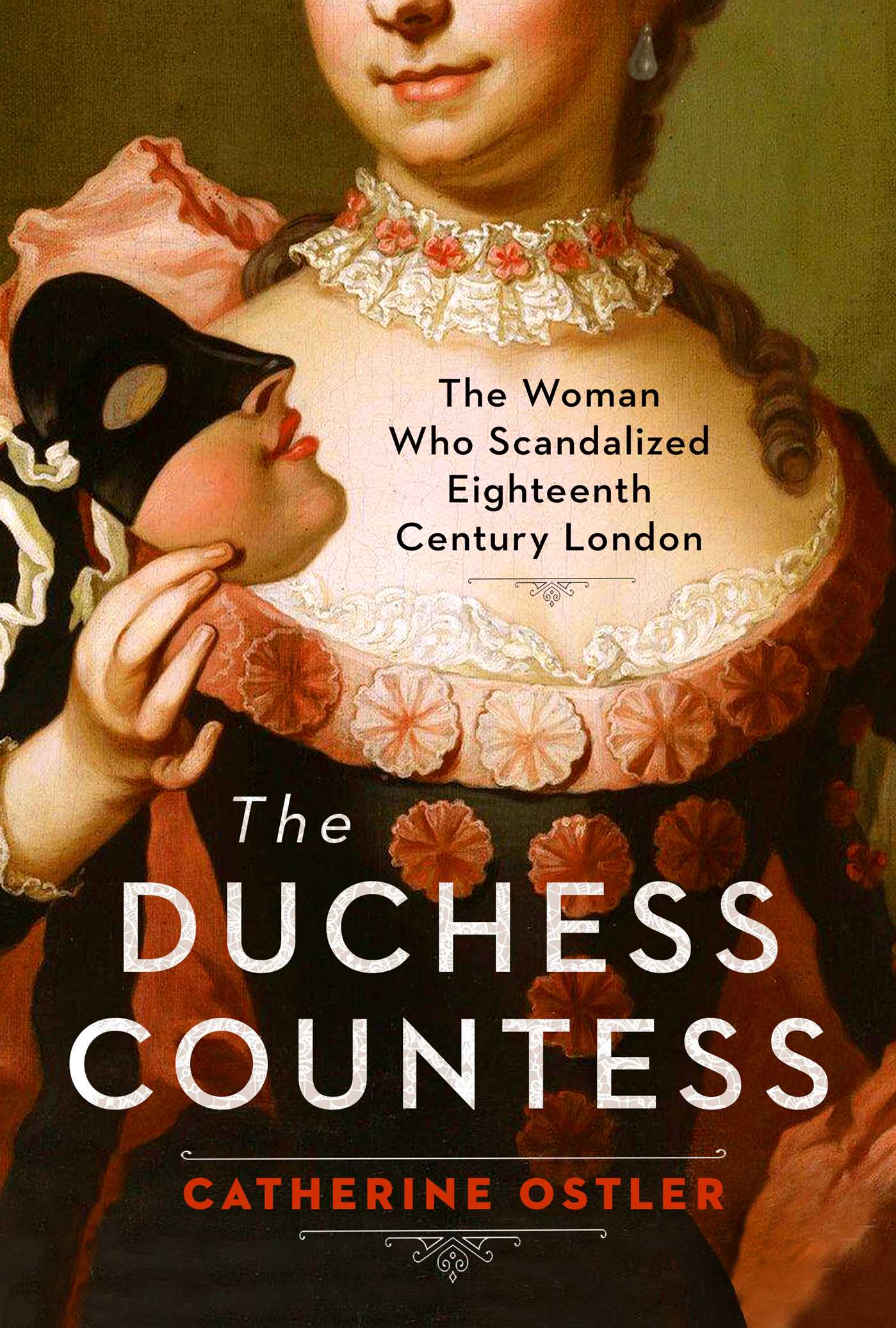
The Most Famous Woman You Never Heard Of

According to the author of this fascinating biography, the three most talked-about women in the 18th century were Catherine the Great, Marie Antoinette and Elizabeth Chudleigh.

Who was she?  A luxury-loving, experience-hungry Englishwoman who was dubbed the “Duchess-Countess” because of having married a duke and an earl.  Rising “from obscure West Country gentry” and though her finances were sometimes uncertain, she eventually moved in the highest circles of London society, was a royal maid of honor–and a bigamist. 

Though her impulsive and rocky first marriage was mostly a marriage in name only, it was never legally ended when she married one of England’s richest men, The Duke of Kingston.  She eventually stood trial for bigamy, complicated by complex legal maneuvering over what she inherited from her second husband.  Where there’s a will, there’s a fray. . . .

Chudleigh’s bigamy trial when she was in her fifties was an international sensation and in England it even overshadowed the growing war with the colonies.  As described in vivid detail, it had all the ceremony and magnetism of a coronation, given how rare it was for a peeress to be on trial in Parliament.  One newspaper reported “Imagination can hardy picture a more solemn, august, and at the same time brilliant appearance, than the court in Westminster Hall.” That trial wasn’t the end of her legal troubles, and readers will be fascinated by them as well as by her taking root in Russia of all places–for a while anyway.

The book offers dazzling and sometimes bizarre insight into a world of stupefying luxury: weird do’s and don’t for those who served royalty, mammoth dinners for a cast of thousands, lavish country and city homes decorated at an unbelievable cost, clothes and jewels worth millions.  It was all part of a highly rarefied lifestyle as decorous on the surface as a minuet, but treacherous if one made a misstep.

In 18th century England, Elizabeth Chudleigh almost always managed to dance that real and figurative dance with envious grace, style, and panache.  She wasn’t just beautiful and decorative: she was smart, educated, multilingual, charming, a wonderful conversationalist, intensely charismatic.  And as famous and controversial as any Kardashian today.

It’s too bad nobody recorded her conversation the way Boswell preserved Samuel Johnson’s bon mots and observations to make them a part of history.  We hear her letters crying for help at various points but don’t get to hear her at her most relaxed and impressive.

She was a woman of great appetites, loved commissioning new homes, loved doing a Grand Tour in Europe when that was still a man’s prerogative.  She was way ahead of her time in making sure she had good publicity–or trying to.  And of course the brightness of her star earned her plenty of detractors and even enemies.  Some of the best moments in this book are the sour comments about her in letters and diaries–you almost feel you’re reading trolls on a Twitter feed.  Their criticism is often sexist but sometimes legitimate as she was impetuous, impulsive and her plans sometimes led to “drama and debacle.”

At one point when she fled England for Rome, where the pope was a supporter, “as far as the locals were concerned, the voluptuous, peculiar, emotional Elizabeth was…a one-woman carnival.” Her travels here and there across Europe, especially when she was ill, are sometimes beyond belief and the author milks them for every juicy detail.  

The book is so filled with so much richness, however, that at times you might feel overwhelmed by names, banquets, vendettas, scandals, legal actions, and above all titles of nobility. It also seems a stretch for the author to keep speculating about whether Chudleigh suffered from borderline personality.

Duchess and Countess Elizabeth Chudleigh lived amazingly large, had amazing adventures, misadventures, famous friends and allies–and famous detractors.  She was a figure of admiration and emulation, and the focus of a unique trial.  This bountiful biography is the perfect material for a miniseries–not least for the grotesque Dickensian frenzy that erupted when Chudleigh died in Paris right before the French Revolution.

Lev Raphael’s first love as an English major was literature of the 18th century.  He is the author of twenty-seven books in many genres and has taught creative writing at Michigan State University where his  literary papers were purchased by Special Archives at MSU’s library.

Writer’s Memoir: After 26 Books, I’m Still Learning How To Write

I’m a highly visual person and I think I got my training early, growing up in New York, a paradise of museums.  From elementary school onward, my parents took me on repeated trips to the Guggenheim, the Museum of Modern Art, and the Metropolitan.

My very first exposure to genius was when the Met bought Rembrandt’s “Aristotle Contemplating the Bust of Homer” for an unheard-of sum.  I recall being very little and actually crawling through the crowds on my hands and knees so I that could get to the front.  The moody, evocative painting was breathtaking, an entrance to a brand new world.

But that’s what I felt in every museum, whether it was discovering Braque at MOMA, Kandinsky at the Guggenheim, or Monet at the Met.  I didn’t have words for my experience, but looking back, I know that time after time, I felt elevated, transported, and hungry.  I wanted to see more.

And I did, roaming gallery after gallery, and expanding my range to other museums like the Frick.  It was a world of magic, discovery, and promise.  I often felt like Henry James when he visited Rome the first time and wrote “I went reeling and moaning thro’ the streets, in a fever of enjoyment.”

I never imagined that I was going to be a painter, but from second grade on, I felt destined to turn the world into words the way these masters turned the world into experiences on canvas.  Each one was a doorway to wonderment and a world that was waiting for me in Europe.

Sculpture appealed to me, too, whether Greek and Roman glories at the Met or Brancusi’s stark, eloquent experiments in texture and form at MOMA and elsewhere.  Years later I would be moved to tears by a whole exhibition of Brancusi’s sculptures at the Tate Modern when I wandered through the near-empty galleries.  Like a character in Brideshead Revisited, I felt that I was “drowning in honey.”

When I started publishing fiction after years after creative writing classes and completing an MFA in Creative Writing, I was keen to paint with words, to describe what people and places looked like.  Sounds and aromas were secondary, not that it stopped me from writing many books and winning prizes, doing book tours here and abroad, finding my work being taught at universities, and even selling my literary papers and correspondence to a university library.

But in recent years, certain writers who appeal to more than the visual have captured me and taught me to be a better writer because they create an environment that’s also aural and olfactory.  Martin Cruz Smith does this in his crime novels set in Russia that expose corruption and bloated bureaucracy, the chaos observed by his cynical hero Akady Renko.  C.S. Harris also creates a mesmerizing landscape that is multi-dimensional in her Regency mystery series which often explores the wealth and privilege of the period’s upper crust.

In a league all its own is Janet Fitch’s best seller White Oleander about Astrid, a young girl coming of age despite the vengeful, seductive madness of her brilliant, demanding, poet mother.  Sent to jail for murder, her mother is the unhappy touchstone in Astrid’s life as she bounces from one foster home to another, learning harsh lessons about life, memory, and herself.  Her Norwegian name can either refer to strength or beauty, and both are qualities she discovers in herself through harrowing circumstances.

Fitch’s story-telling is powerful because it’s rooted in emotion and the senses, woven through with striking similes and metaphors:

By April, the desert had already sucked spring from the air like blotting paper.

I wanted to tell her not to entertain despair like this.  Despair wasn’t a guest, you didn’t play its favorite music,  find it a comfortable chair.  Despair was the enemy.

So much going on in Kandinsky, it was like the frames were having trouble keeping the pictures inside.

The pearls weren’t really white, there were a warm oyster beige, with little knots between them so if they broke, you only lost one.  I wished my life could be like that, knotted up so that even if something broke, the whole thing wouldn’t come apart.

Of course Astrid doesn’t get her wish as her life gets broken apart again and again, breaking the reader’s heart because she feels so deeply and is so alone.  That last quotation is a perfect example of Fitch’s gift for taking an object and making it become deeply personal, emblematic of a character’s turmoil.

I was so caught up in the beauty of the writing and the fierceness of the author’s vision, I didn’t want it to end, but I also knew that it would inspire me to make my own books live and breathe more fully than before.

Lev Raphael is the author of State University of Murder and two dozen other books in many genres. He offers creative writing workshops, editing, and mentoring online at writewithoutorders.com.