Brilliant, Scary Satire

As a book reviewer, you can often feel like you’re on a high-speed train missing all the terrific possible stops along your route. People wherever you go mention books that you somehow never got to read read or read about because you’re too damned busy reading and reviewing other books. 

Back when I worked for half a dozen different publications, I remember weeks where I was reviewing three or more books on deadline and either reading or writing with no break whatsoever. Okay, I did eat and go to the john.  And maybe hit the gym, but in my head I was always thinking about the next review–and the one after that–and the one after that.

So I confess I missed the bravos for The Other Black Girl, but I am here to tell you that it is a laugh-out-loud, gorgeously written, and effing brilliant satire of the publishing world–and much more.  I love this powerful novel and I envy the author her style, her humor, her satire, her poise.  She is stone cold amazing. And for those readers who think MFA programs turn out cookie-cutter writers, guess again.  She is an original.

The set-up is great: Nella, whose name recalls the Harlem Renaissance novelist Nella Larsen, is the only Black editorial assistant in the prestigious Wagner publishing house.  A publisher whose mail room staff is all people of color but whose editorial, art, and publicity staff are all uniformly white, many of them quite privileged.  Nella’s little cubicle is a lonely place, and “blacksplaining” cultural realities and events to her White colleagues often works her last nerve. 

She’s not a legacy hire and though her family was comfortable, they weren’t wealthy and that helps isolate her even more–at least in her own mind.  She’s also not happy being stuck at a low pay grade, though she loves the work, most of the time.  Enter Hazel, a much hipper Black editorial assistant with whom she feels she can (and should) bond, but things quickly get weird, competitive, and creepy in the extreme.

The author worked at Knopf for three years so she has an inside track on creating a workplace filled with kooks and quirks, competition, hypocrisy and back stabbing.    Like so many organizations today, Wagner makes feeble attempts to embrace diversity and the author’s wit here as elsewhere is stiletto-sharp.  The satire is never laid on too thick, however, and Nella is a wise, weary hero to admire and root for.

And so you feel you’re deep in a novel about workplace competition, Black solidarity and White cluelessness/condescension–until the book expands way beyond what you might expect when we learn the meaning of the title.  That’s when the book plunges deep into an alternate, hair-raising reality that’s a spoof conspiracy theorizing.  The  register becomes fantasy-horror and it’s a dazzling switch. I was glad that I put everything aside this weekend to read the book straight through.  The Other Black Girl is a knockout debut.  ★★★★★ 

Lev Raphael, author, editor, and teacher, is a prize-winning publishing veteran.  His 27 books span genres from memoir to mystery.

Murder Most Foul

Before you even turn The Girls over to read the blurbs on the back or open to read the publisher’s description on the inside jacket, you know you’re in for a lovely, barbed treat. The cover illustration is by Edward Gorey and that means you can expect sly wit and unusual mayhem.

Susan and Janet have lived a harmonious and very busy life for almost a decade near a picturesque English village doing picturesque things to stock their odd little shop in town. They keep free-range chickens and bees, sew and cobble.  The store is filled with their fresh eggs; jams, preserves, and chutney; honey combs; clogs; home-made aprons and cloth belts; their prize-winning elderflower wine–and even labor-intensive goat cheeses.

The two women have a busy and apparently satisfying life until Susan goes off to Greece to find herself and something unusual finds Janet: a one-night stand that leaves her pregnant.  It’s her first time with a man, so that’s either luck or misfortune, how she and Susan react is worthy of a miniseries.

Bowen is absolutely brilliant when it comes to charting the highs and lows of an intimate relationship, the swift changes of mood minute-by-minute as well as over months and even years.  He finds comedy there, and tragedy too.

The writing throughout is rich with color in descriptions of flowers, shrubs, flowering trees, do-dads and knickknacks, and the narrator is like a deadpan story-teller trying hard not to smirk because she knows you’re going to be surprised and doesn’t want to give anything away.  I had to read passages aloud to my spouse because they were so amusing, as when Bowen writes that “the sound of raindrops on the window was like hundreds of old gentlemen rustling the pages of the Financial Times.”

At times you may feel like you’re in wacky P.G. Wodehouse territory: the adventures of an escaped pig which will surely make you laugh aloud.  At others, you’re entering the realm of Patricia Highsmith where the quotidian is most definitely going to be exploded.  I was also reminded of Stella Gibbons’ satirical Cold Comfort Farm, but Bowen has his own voice here and his own style because his narrator is so wonderfully intrusive and even challenging.

Special kudos have to go to the book designer: The Girls isn’t just a pleasure to read, it’s a distinct pleasure just to hold in your hands.  Readers should be grateful for the publisher’s mission to reprint forgotten novels that deserve new audiences–and do so with elegance and style.  This is must read for anyone who’s a fan of British fiction, crime fiction, and comic stories set in supposedly bucolic towns. ★★★★★ 

Lev Raphael has reviewed books for The Washington Post, The Detroit Free Press, Jerusalem Report and several public radio stations.

Mystery and Mockery

My European-born mother was given to making pronouncements about life in the U.S. that were halfway between a judgment and an epigram. One of my favorites: “There is no such thing as enough in America.”

I thought of that while reading  the entertaining Yellowface, in which a struggling author, June Hayward, steals a manuscript from her famous, best-selling Chinese-American friend after she dies.  June fills in gaps, polishes it extensively, and gets it published as her original work.  She becomes a huge success, but every thing she gains makes her hungry for more.

It’s initially great fun to watch her first rave about the stolen manuscript, then slowly find fault with it, then fix the problems she sees and tone down the excesses, and finally claim that’s it’s undeniably hers because it’s so much better.  And isn’t she doing her friend a great service in making it a better book?

Selling the novel turns her world upside down and June is overwhelmed by her good fortune: a vast amount of money, a publishing house that really cares about her, headlines everywhere she turns, best-seller status, great reviews, profiles in prestigious magazines and newspapers, strangers recognizing her.  She becomes a celebrity author, though she knows that it could just as easily have been someone else who was picked to be turned into a star. 

The downside is her incredibly masochistic addiction to reading everything she can about herself in print and on social media, which can either be a serotonin boost (as she’s overly fond of saying) or infuriating when she’s accused of cultural appropriation because she’s white and the book is primarily about Chinese laborers in France during WWI.

Kuang certainly knows how to mock the publishing world as well as Robert Harris does in The Ghost Writer, and she takes special aim at complaints of cultural appropriation that will remind you of the controversy over American Dirt.  She also eviscerates what Joni Mitchell called “the star-making machinery” that elevates certain writers for other reasons than the quality of their books.

Yellowface can be read as a sort of mystery-thriller because as soon as June steals the manuscript and decides to publish it, you feel a clock ticking: won’t someone discover her fraud and shame her–or worse?  Of course, it doesn’t take long for the predictable Twitter mobs to attack her, and the waves of Twitter warfare in this book are exhausting.

You may be wondering if the book ever explains why June steals Athena’s work, and the real answer goes beyond jealousy in a devastating set of revelations. 

Given that Kuang is the kind of megastar author who dies in this book, is her satire of the struggling friend empathetic or cruel?  That’s one question.  Another is the revised, stolen novel itself.  When June shares some sections of the book that she actually wrote (bragging about their brilliance), the writing doesn’t seem stellar, yet she claims the audience is under her spell.  Why didn’t Kuang’s editor pay special attention to those passages to make them more convincing? 

As reported in The Washington Post, this novel “is now at the center of a real-life publicity frenzy, its cover gracing tote bags, railway ads and a giant mural at the London Book Fair.”  That’s the kind of PR that June gets in the novel for her book.

Yellowface interrogates friendship, jealousy, the randomness of fame, and the truly bizarre realities of publishing today.  The last half really gathers steam and elevates the book above satire.  After you finish, you might well decide to cut Twitter loose and give up doom-scrolling forever.  If you can. . .  ★★★★

Lev Raphael has reviewed books for The Detroit Press and many other publications.


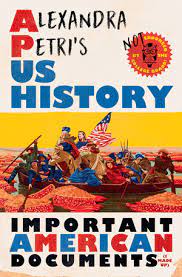
Alexandra Petri Rewrites American History (and more!)

Bummed out by politics, climate change, inflation, long Covid? Alexandra Petri, Washington Post humorist, has the answer as she charges into the controversy over what students should know about American history and literature.

She’s made stuff up. Hilarious stuff, like John Adams and his wife doing the 18th century version of sexting, which doesn’t go very well. And the story of one of the famous colonial Minuteman who were supposedly able to defend freedom in a minute.  This guy wasn’t exactly on time, taking a few hours to get ready because he couldn’t find his musket or his boots and he wanted to prepare some snacks for the battlefield.  His wife had a few things to say about that.

Petri toys with documents like The Federalist Papers and The Gettysburg Address, but some of the funniest entries in this collection are new takes on American literary classics  like Moby-Dick, Leaves of Grass, The Great Gatsby, Howl, In Cold Blood, To Kill a Mockingbird, and The House of Mirth.  Edith Wharton character dolls?  Why not!  And why shouldn’t the man who bought The Yellow Wallpaper‘s wallpaper request a refund?

English majors, rejoice: Who else in the world would be doing a spoof of James Baldwin’s Giovanni’s Room (one of my favorite novels)?  And the Raymond Chandler satire made me laugh all the way through–it’s one of the funniest pieces in the book, and maybe in human history.  At times the dry turns of phrase reminded me of Philomena Cunk.

Petri’s pastiche of iconic figures is always piercing and revelatory, as when Frank Lloyd Wright tussles with a client about the commission to build the perfect home.  Guess what?  It’s not remotely what the client wants.  And her take on The Teapot Dome Scandal eerily prefigures excuses we’ve recently hear that “explain” why certain figures in government have seen so much money changing hands.  I name no names.

Petri is fiendishly well-read and her humor is consistently delicious, like the lost vignettes from Fifty Shades of Gray that pop up throughout the book which range in time from the Puritans to Trump (sic transit insania mundi).  You’ll never think of Patrick Henry the same way again after Petri serves him up to you with special sauce–and who else could have imagined customer reviews of Our American Cousin from the night Abraham Lincoln was shot?

Writers can learn a lot from her satire and may especially appreciate troubled fan mail to Harper Lee wondering about that missing mockingbird as well as the monomaniacal letter Loraine Hansbery gets about promoting raisins.

The title of the book clearly indicates that Petri made all these documents up, but you have to wonder if this book will get devoured by AI chat bots anyway.  I can imagine students turning in essays about how Melville’s publisher wasn’t very keen on the idea of a book (mostly) about whales.  And much, much, worse.

Well, given the state of academia today, with enrollments going over a cliff, professors can likely use a good laugh.   ★★★★★ 

Lev Raphael is the author of the satirical Nick Hoffman mystery series along with seventeen other books in many genres.  He has reviewed books for The Detroit Free Press, Jerusalem Report, The Washington Post, The Ft. Worth Star-Telegram, Boston Review and a handful of public radio stations in Michigan.

Why I’ve Been Publishing Academic Satire Long Before It Was Discovered by Netflix

In my academic mystery series, I exiled professors to basement offices well before The Chair became a series starring Sandra Oh.  I’ve seen much worse behavior and it’s inspired my fictional English department since the 90s.  The New York Times Book Review has noted that “The Borgias would not be bored at the State University of Michigan, that snake pit of academic politics.”

Of course they wouldn’t.  Academia  has the egomania of professional sports; the hypocrisy of politics; the cruelty of big business; and the inhumanity of organized crime.

But fans sometimes ask me if academia is really that bad.  Are professors that selfish, backbiting, and ungenerous?  Yes, they can be. Academic culture from school to school has quirks and even idiocies that make great material for satire (and crime).  Sometimes the behavior is egregious, sometimes it’s just ridiculous. Either way, it’s great fodder for fiction.

Here’s a case in point.  At one private college where I read from one of my most successful books, I wasn’t brought in by English or Creative Writing faculty, but by a different department.

I love readings.  I have a theater background, years of experience on radio, and I’ve done hundreds of readings on three continents. I’ve also taught workshops for writers on how to do readings; they require practice, art, and planning.

Only four people turned up for this particular campus reading, and the disappointed coordinator explained why.  Whenever she brought in a speaker who writing students would naturally be interested in, English and Creative Writing professors consistently failed to do anything to promote the reading.  They wouldn’t be co-sponsors, didn’t encourage their students to show up, and basically boycotted the event.  Why?  Territoriality.  Apparently they felt that  they’re the only ones who should be inviting authors to campus.

It made me laugh, because it seemed so typical of academic pettiness.  But it also made me sad because the writing students might have learned something and enjoyed themselves.

I never obsess about  numbers when I do a reading: 4 or 400,  the audience deserves my best, and that’s what I gave them at this college.  Too bad the small-minded English Department and its writing professors don’t do the same, don’t really care enough about their own students to point them towards opportunities right there on their own little campus.  It makes you wonder how else they may be giving students less than they deserve as they jealously defend what think is their turf and nobody else’s.

Lev Raphael’s latest academic mystery is Department of Death.  He mentors and coaches writers as well as edits manuscripts in all genres at writewithoutborders.com.

Why I Write Queer Crime Fiction

I never set out to write mysteries, queer or otherwise. When I launched my career as an author, it was with short stories which were ultimately collected in a book that won a Lambda Literary Award.

But one of them, “Remind Me to Smile,” featured a couple of academics faced with a bizarre situation: Stefan has secured an ex-lover a job in the English department where he’s the writer-in-residence.  His partner Nick is outraged and then a bit crazed when Stefan invites the ex to dinner.  It was comic but also focused on the struggles of being a couple years before marriage equality changed the landscape.

My first editor at St. Martin’s Press was very taken by the story, only he said that the dinner guest should have been poisoned (!). And then a few years later, when I was wondering where I should take my career after a collection of short stories, a novel, and a study of Edith Wharton, my editor said “Nick and Stefan could be like Nick and Nora Charles.”

That’s when the Nick Hoffman series was born. He and Stefan teach at the same university and they’re happy together, but the unexpected keeps intruding into their lives thanks to the murderous academics they work with. I’ve continued writing it over the years because I loved the characters and because I loved the academic setting where, as Borges put it so well, you find bald men arguing over a comb.

I was already a fan of mysteries before I started; I grew up in a household filled with Agatha Christie books and loved reading more recent mysteries and thrillers which I discussed on a regular basis with my best friend. Reading so much crime fiction made me determined to avoid one thing: sleuths who don’t get changed by what happens to them. In far too many books in that genre, the protagonist discovers a body and then goes off for breakfast at Denny’s as if nothing’s happened.

Nick ages in the series and is definitely changed by the deaths he encounters. His relationship with Stefan develops, too. Depicting a loving queer couple over time and under stress has been one of the joys of this series.  The world has changed a lot, too, since the series began in the 90s, so it’s been fun to chart those changes in mysteries, which are good vehicles for social commentary.

Mystery writing has made me a better teacher, too, and I’ve been fortunate to teach mystery fiction in classes, workshops, and online.  The series has more impact than I would have guessed, putting me on the map in ways I never could have imagined.  The New York Times Book Review took notice, especially relishing the academic milieu.  That’s how a writing career goes: the unexpected is always your companion.  And of course, the unexpected keeps happening to Nick and Stefan living in a bucolic college town that has a dark side.  Through all of it, however, their bond is never shaken.

Lev Raphael’s latest mystery is Department of Death, which Publishers Weekly called “immensely enjoyable.” He mentors writers, edits manuscripts, and teaches writing workshops online at writewithoutborders.com.

(fingerprint image by Kurious at Pixabay)


An Academic Nest of Vipers

When I do readings from my mystery series, people ask, “Are universities as loony and vicious as all that?”

Yes.  Absolutely.  And how do I know? Because I didn’t just escape that world with lots of notes, I have friends who are still there, reporting fiction-worthy incidents on a regular basis.

One chair I heard of had a bizarre approach to resolving a conflict between two professors: He suggested that the two of them get drunk together at the annual Christmas party and all their problems would be resolved—they would be friends forever! That’s on the ludicrous side, to be charitable.

Another held academic cage matches. Adjuncts competing for the possible tenure-track positions that might, just might be opening up each year had to present their work-in-progress every week (!) and put it in the best possible light and hope they’d win the prize. The pressure was intense, the competition ugly and brutal. Then there’s a department chair I heard of who revealed personal psychological information about a professor during a department meeting while supposedly “worrying” about her mental state, totally violating that professor’s privacy.

There’s another who knew a faculty member was going to complain about his disregard for university regulations and not only tried to stop her from a formal complaint at a university committee, but sat behind her at the meeting along with one of his henchmen and muttered derisively when she read her statement, trying to intimidate her.

A religious studies chairman I was told about argued with a rabbi teaching as an adjunct in his department–a rabbi!–that Judaism was absolutely not a culture, but could only be spoken about and taught as a religion. The rabbi was fired for disagreeing.

When my office mate at Michigan State University reported that a graduate student in the department who was an ex- burst into her apartment, roughed up her current boyfriend and threatened her, the department chair did absolutely nothing.

And reports from another department I know of describe the current atmosphere as “Stalinist.” While there’s significant disapproval of actions the chair is taking to limit academic freedom and free speech, faculty members who disagree are afraid to speak up for fear of harassment and punishment. The faculty listserv is now off limits to discussion of anything remotely “controversial.”

My Nick Hoffman series is satirical, extrapolating from real situations and making them more ridiculous and threatening–but the emotional core is ultimately true.  The psychological toll this kind of rampant and widespread abuse of various kinds can take is also true.

There’s no evidence that George Bernard Shaw actually said “If you want to tell people the truth, you’d better make them laugh,” but whoever is the source, that quote has guided me through my series and will continue to do so.

Lev Raphael is the author of 27 books from mystery to memoir.  His latest book Department of Death just earned a starred review from Publishers Weekly.  It will be available only until the end of 2021.

The Edith Wharton Murders Giveaway

In my breakout mystery The Edith Wharton Murders, two rival Wharton societies are brought together in one conference–and murder results. I got the idea at a Wharton conference.

Nobody was killed there, but I think a lot of people had their pride wounded.  One of the keynote speakers subtly dissed the attendees for paying so much attention to Wharton (!) when there was another writer this professor considered more important. The keynote speaker went on to praise this lesser-known writer.

That was before smart phones, so nobody was able to look the writer up while the keynote address went on. I’ll always remember how that moment typified the jockeying for position that goes on in academia 24/7. But that’s the mild stuff.  Professors undermine their rivals’ reputations with gossip and hostile journal essays, poach each other’s graduate students, launch Twitter campaigns to get them removed from programs or even fired.

Of course it’s all much more entertaining in a mystery if you have actual corpses.

My college mentor, a Wharton bibliographer, was at the conference, and so I wrote her into the book as a best friend and relative of my sleuth Nick Hoffman. He’s been given the thankless task of bringing two warring factions in the Edith Wharton field together and thinks of them as no better than gangbangers with advanced degrees.   I invented snark of all kinds, inspired by stories people across the country had told me about Ivory Tower insanity, and motives for murder were easy to come by.

St. Martin’s Press published the book and I met with the editor who was in love with the whole idea at my favorite café near Lincoln Center. I was in New York for the American production of Tom Stoppard‘s stunning play Arcadia. I’d seen the original production in London a few years before, so the night was filled with glamour and excitement for me, and all of that comes back whenever I think about the book.

The mystery earned me my first review in the New York Times and it was a rave: a writer’s dream come true.  I will never forget how thrilled I was when my agent faxed the review to me.  One of the coolest things I heard about the book’s reception out in the world was that it wasn’t just showing up on mystery shelves at bookstores, it was also being shelved alongside books of Edith Wharton herself.

The Edith Wharton Murders is out now with a fourth publisher and a fun new cover (its fourth!). You can find a review and a book giveaway at the following website: https://www.krlnews.com/2020/09/the-edith-wharton-murders-by-lev-raphael.html

The Review That Thrust Me Into the Spotlight

The New York Times ruled in my family when I was growing up in Manhattan.  My mother especially loved the Sunday Magazine articles, my brother relished the daily puzzles, and I enjoyed reading book reviews and features about authors.

I wanted to be an author myself as early as second grade, when I started writing short stories.  And of course, I wanted to have a book of mine reviewed in the Times, someday because I thought that would be the ultimate sign I had made it.

Well, years later, I was heartbroken when I heard from a writer friend that he had heard my first book of short stories was going to be reviewed there.  I waited and waited, but nothing happened.  Then I published a biography and study of Edith Wharton’s fiction.  No review.  Two strikes.

At that point, I was discouraged enough to think I would never be reviewed in the Times.  I should have taken hope from lines Russian poet Joseph Brodsky wrote:

But, as know, precisely at the moment/when our despair is deepest, fresh winds stir.

One Monday, I got a call from my agent that my second mystery had just gotten a rave review from Marilyn Stasio, the most important mystery reviewer in the country.  My agent’s assistant faxed it to me and as I read the review, I actually jumped up and down for joy.  Friends started contacting me, my editor was thrilled as was my publisher, and I started hearing reports that the book wasn’t just being shelves in Mystery and Gay Literature sections in bookstores, but sometimes in Fiction right next to Edith Wharton.  And face out, which makes a big difference when it comes to sales.

The review offered great pull-quotes like this one:  “Killing is too kind for the vindictive scholars in Lev Raphael’s maliciously funny campus mystery.”  And because it was in the New York Times, publishers would use various parts of the review on  mysteries I’d write after that one.  Likewise, many people introducing me at events where I’ve done talks and readings have referred to the review.  It’s a kind of touchstone, even though I’ve gotten many more good ones in other newspapers and magazines since then.   The Times is that impressive.

The Edith Wharton Murders has recently been re-published with a gorgeous new cover, a foreward by noted author Gregory Ashe, and an introduction the publisher asked me to write.  Seeing it reborn brings back the thrill of being a new author having his biggest dream come true.

Lev Raphael is the author of 26 books in genres from memoir to mystery.  His work has been translated into 15 languages, and Special Collections at Michigan State University’s Library archives his literary papers.


Academia: A Nest of Vipers?

Over the years and on many book tours for my mysteries, people have asked me “Is academia as vicious as all that?”

The answer is Absolutely. How do I know? Because I not only escaped that world with lots of notes, but I have many friends who are still there, reporting one fiction-worthy incident after another to me.  Reality, not satire about the university,  is what’s over-the-top.

I’ll start with a minor example that shows you how petty and small-minded academia can be. Back in 2011, I was invited to teach at Michigan State University’s English department, where I had earned my PhD years before. The current chair had realized via a news story that I had published more books than the entire creative writing faculty put together. He was impressed, and I was flattered.

When I started teaching, the office manager wouldn’t order a plastic name plate for my office door, the kind that all the faculty members had. We’re talking about something that costs just a few bucks and is recyclable, for a department with a budget well in the millions. That was as silly as it was insulting.

My mystery State University of Murder focuses on a charming but dictatorial chairman of an English Department, Napoléon Padovani, who manages to alienate almost all his colleagues in an oppression blitzkrieg. He’s a composite of department chairs I’ve heard about from across the country.

One chair had a bizarre approach to resolving a conflict between two professors: he suggested that the two of them get drunk together at the annual Christmas party and all their problems would be resolved—they would be friends forever! That’s on the ludicrous side, to be charitable.

Another held academic “cage matches.” Adjuncts competing for the possible tenure-track positions that might, just might be opening up each year had to present their work-in-progress every week (!) and put it in the best possible light and hope they might win the prize. The pressure was intense, the competition ugly and brutal. There’s a department chair I heard of who revealed personal psychological information about a professor during a department meeting while supposedly “worrying” about her mental state, totally violating that professor’s privacy.

And another chair who knew a faculty member was going to complain about his disregard for university regulations and not only tried to stop her from a formal complaint at a university committee, but sat behind her at the meeting along with one of his henchmen and muttered derisively when she read her statement.

A religious studies chairman I know of argued with a rabbi teaching in his department as an adjunct that Judaism was absolutely not a culture but could only be spoken about and taught as a religion. Their disagreement was a major reason the rabbi wasn’t rehired.  I should add that the chair was not Jewish.

When my office mate at Michigan State University reported that a graduate student in the department who was a former boyfriend had burst into her apartment, knocking the door off her hinges, and roughed up her current boyfriend and threatened her, the chair did absolutely nothing.

And dispatches from a department I know report that the current atmosphere is “Stalinist.” While there’s significant disapproval of actions the chair is taking to limit academic freedom and free speech, those faculty members who disagree are afraid to speak up for fear of harassment and punishment. And the faculty listserv is now off limits to discussion of anything remotely “controversial.”  Anyone stepping out of line is instantly attacked and vilified.

My Nick Hoffman series is satirical, taking real situations and people, extrapolating from them, making them more ridiculous, more threatening–but the emotional core is ultimately true. And the emotional toll this kind of rampant and widespread abuse of various kinds can take is also true.

There’s no evidence that George Bernard Shaw actually said “If you want to tell people the truth, you’d better make them laugh,” but whoever is the source, that quote has guided me through my series and will continue to do so.

***
Lev Raphael is the author of 27 books in genres from memoir to mystery, most recently Department of Death.  He mentors and coaches writers at writewithoutborders.com.  This blog originally appeared at Mystery Fanfare.